
Project Overview
Multidisciplinary Research Facility | Advanced Laboratories | Academia - Industry Collaboration | 7,325 sq.m. Built-up Area
The Central Research and Development Centre for Multidisciplinary Research and Innovation at Veer Narmad South Gujarat University (VNSGU), Surat, is an ongoing project with approximately 7,325 sq.m. of built-up area. Located within the existing university campus, the Centre is conceived as an advanced multidisciplinary research environment bringing together researchers, scientists, faculty members, postgraduate students and industry collaborators on a common platform for research, innovation and knowledge exchange.
The Centre will support fundamental and applied research in Chemical Sciences, Biological Sciences, Nanoscience and Nanotechnology, Artificial Intelligence, Robotics, Interdisciplinary Sciences, Environmental Sciences and Physics, while remaining adaptable to future areas of scientific investigation. Its broader objective is to create an ecosystem in which research can progress beyond isolated academic activity towards collaboration, technological innovation and practical applications for industry and society.
The facility is planned to promote world-class multidisciplinary research, technology transfer and the development of meaningful products, processes and applications. It will strengthen interaction among students, faculty, research institutions and industry, enabling researchers to understand real-world challenges and helping promising innovations move towards implementation and commercialization. The Centre will also support the dissemination of contemporary scientific knowledge and provide training opportunities for undergraduate and postgraduate students, PhD scholars, post-doctoral fellows, researchers, school teachers and faculty members. Collaborations and MoUs with national and international universities, laboratories and industries will encourage global research networks, student exchanges and technological partnerships. Facilities will also enable retired professors and scientists to continue contributing through research and mentorship, while promoting opportunities for women researchers, access to scholarships and research programmes, and adherence to research ethics.
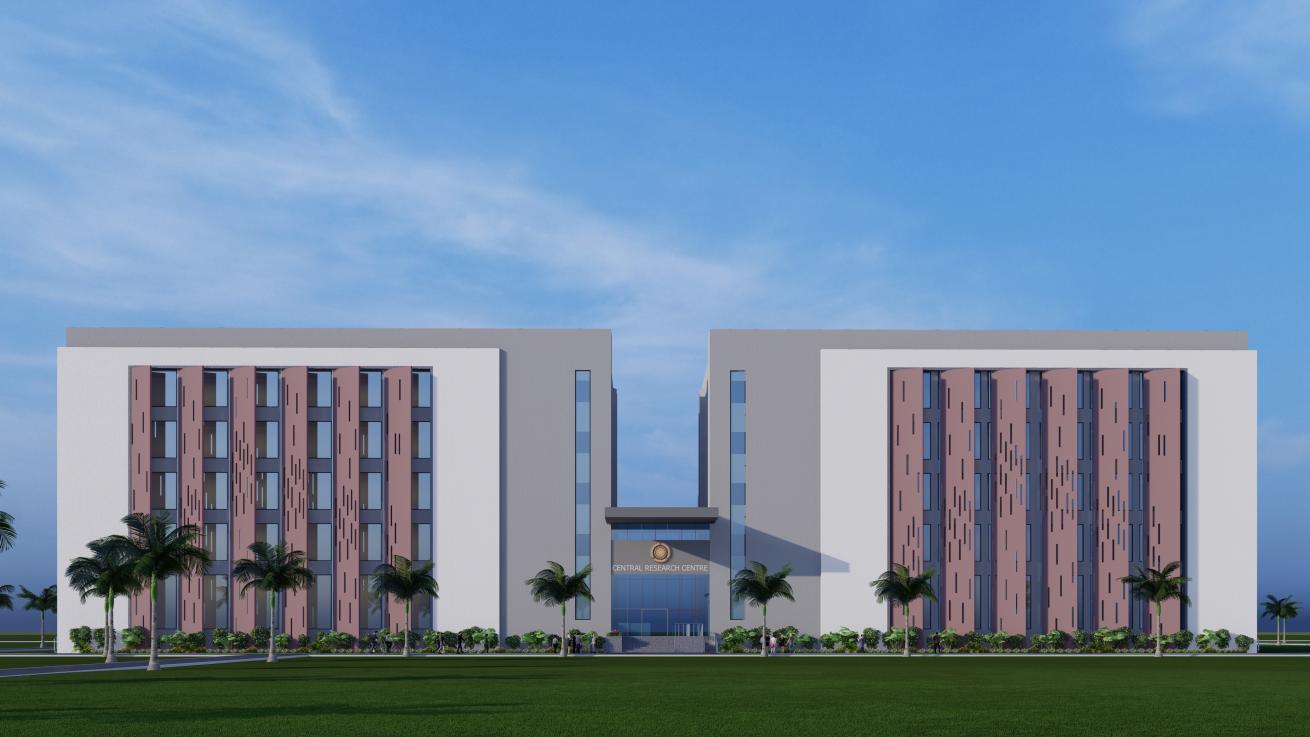
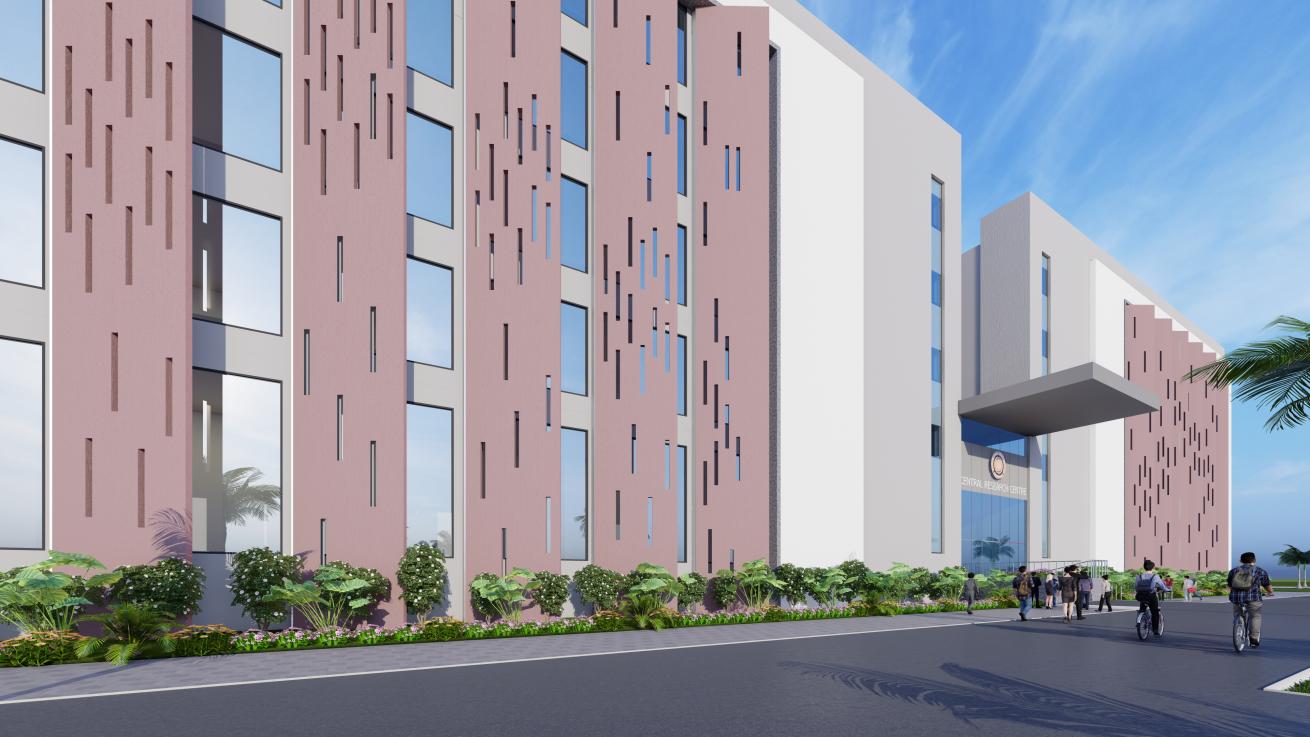
The planning responds to the requirements of advanced research while integrating the building with the existing VNSGU campus. Laboratories, researcher workspaces, preparation rooms, specialized instrumentation facilities, workshops, offices and collaborative areas are arranged to support efficient movement between experimentation, analysis, discussion and documentation. A prominent double-height entrance establishes the building’s institutional identity, while an exhibition area showcases research achievements, innovations, prototypes and publications. Administrative offices are distributed across two levels with a mezzanine.
The ground floor accommodates 7 major research laboratories, a workshop and advanced instrumentation facilities including DLS, XRD and NMR. From the first to the sixth floors, approximately 7 laboratories are organized on each level, supported by research workspaces and preparation rooms. An auditorium, training and seminar rooms, conference facilities, a boardroom, storage and maintenance areas support academic programmes, PhD juries, lectures, industry meetings and national and international collaborations. Dining and accommodation facilities are also envisaged for visiting professors, researchers, experts and collaborators.
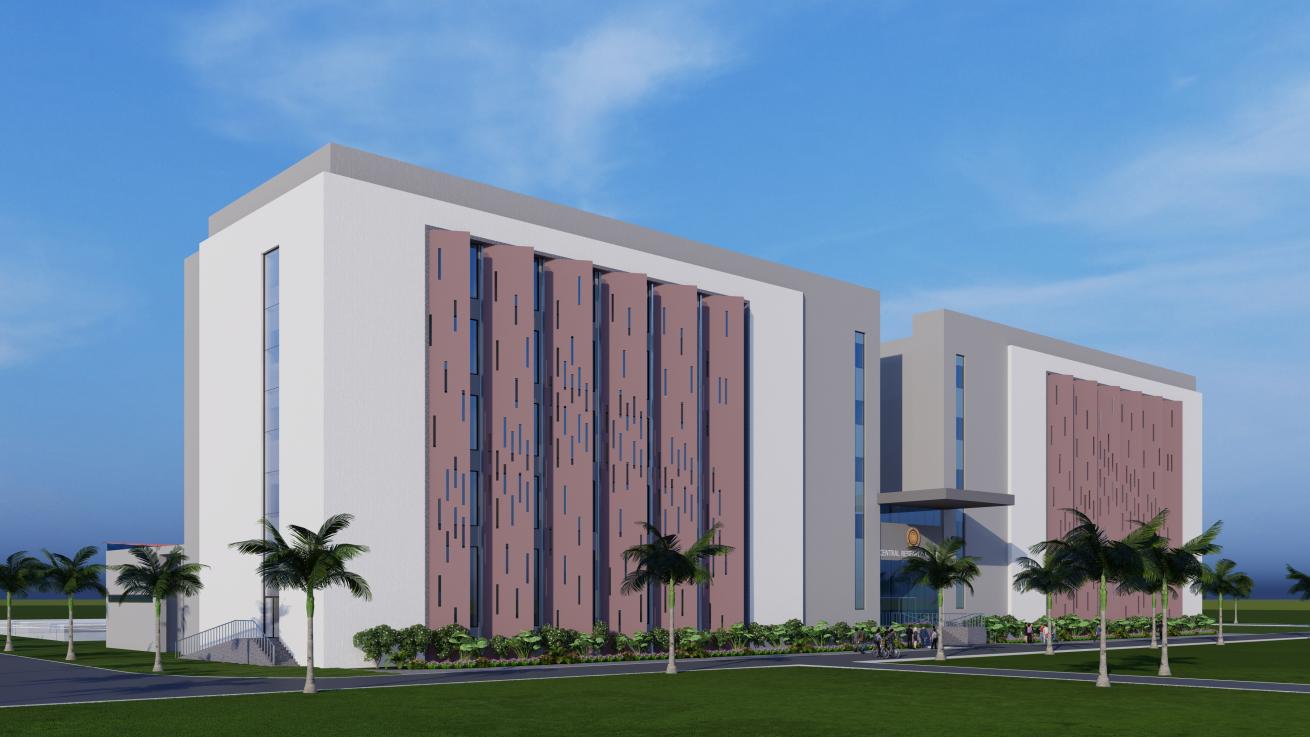
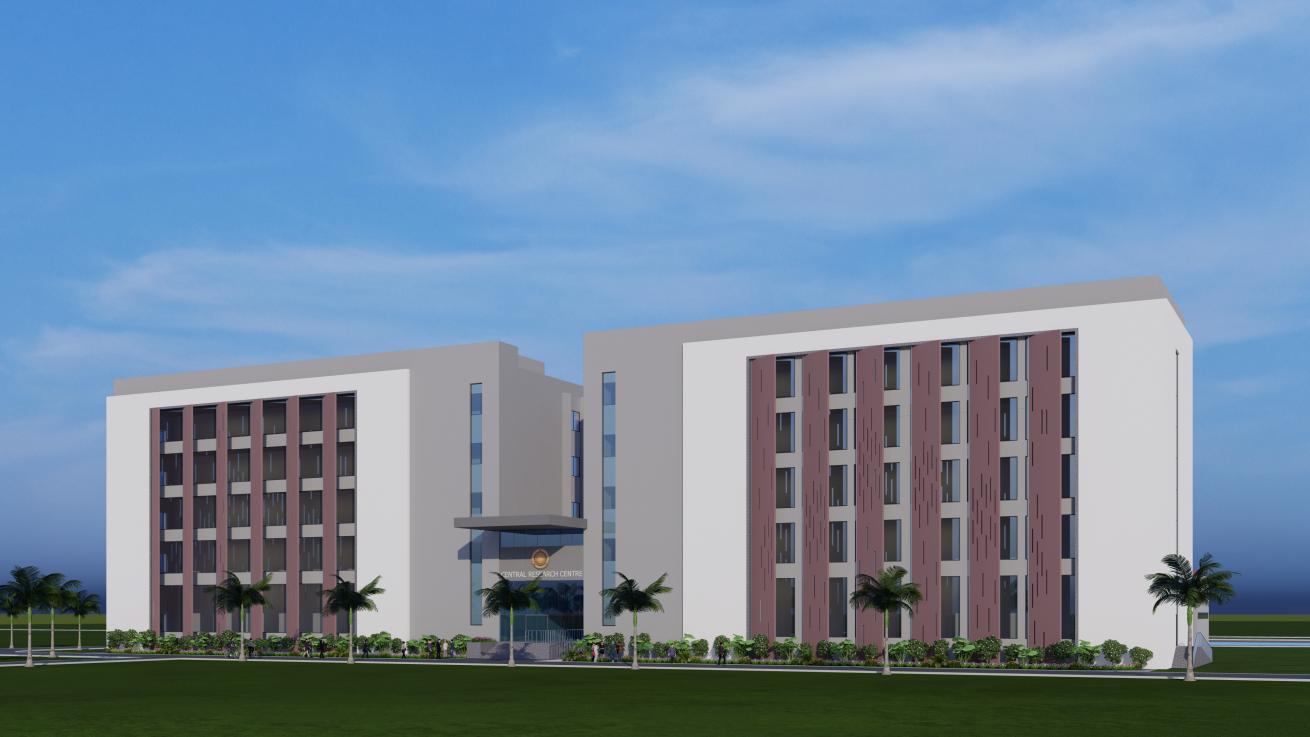
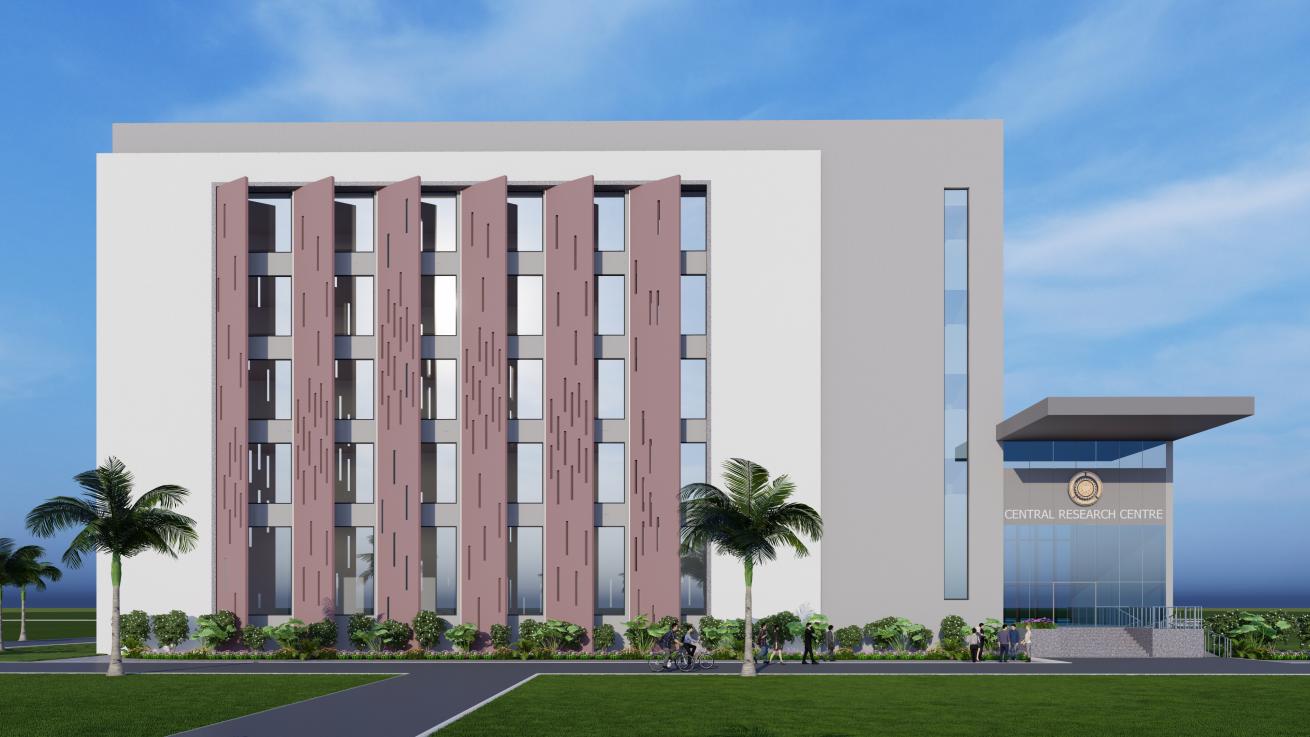
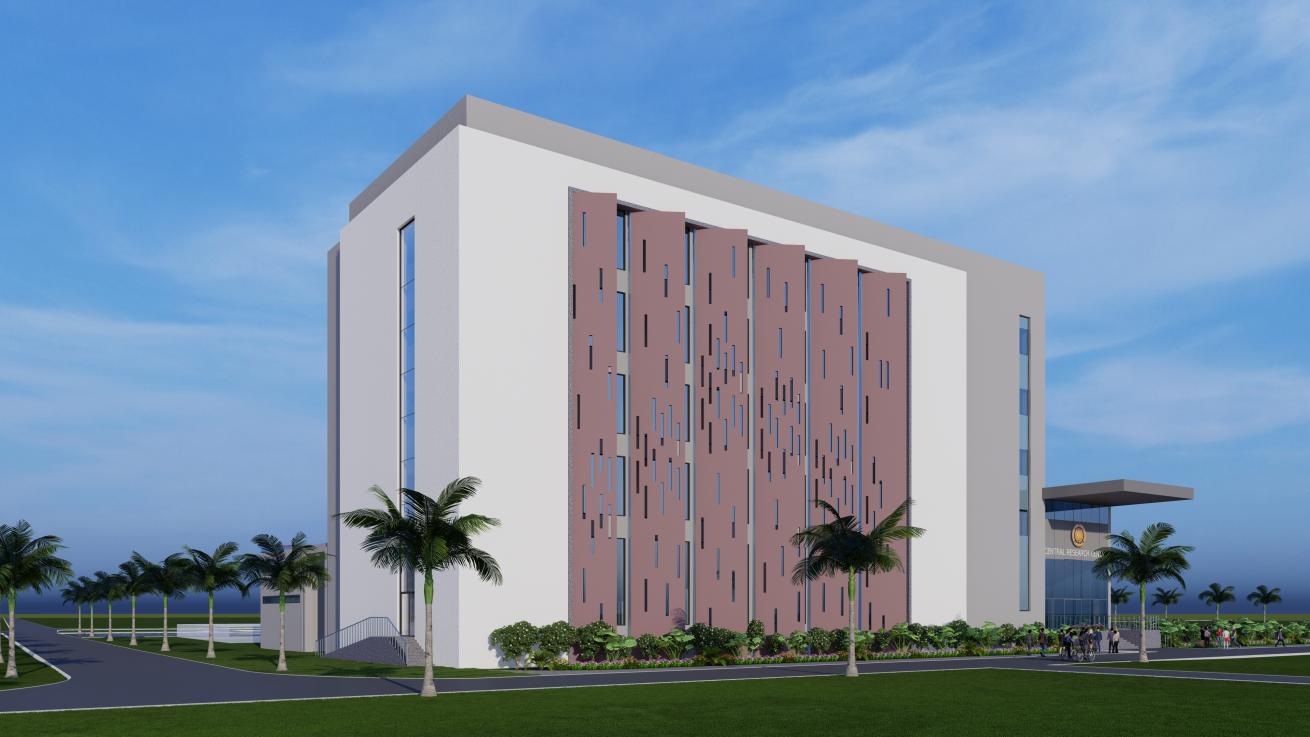
Architecturally, the Centre expresses technology, innovation and scientific advancement through a contemporary façade featuring diagonal geometry, vertical slit openings and perforated surfaces. These elements create dynamism, regulate daylight and produce changing patterns of light and shadow. The building is intended to establish a distinctive identity within the campus while providing an integrated platform where researchers from different disciplines can collaborate and transform knowledge into innovations benefiting industry and society.
Planning that connects disciplines and ideas.
Architecture supporting research, collaboration and discovery.
A research environment designed to transform knowledge into innovation.